


Introduction
Healthcare can be confusing, especially when deciding between inpatient vs outpatient services. Understanding the differences can help patients, families, and caregivers make informed decisions about treatment, costs, and recovery. This guide will explain everything you need to know about these two types of medical care, including advantages, risks, costs, and typical procedures.
Inpatient vs Outpatient

Healthcare services are generally classified into two main categories: inpatient and outpatient. Both serve critical roles but differ in terms of care, duration, and costs.
Definition of Inpatient Services
Inpatient services refer to medical treatments where patients are admitted to a hospital or healthcare facility and stay for at least one night. Inpatient care is usually recommended for serious illnesses, surgeries, or conditions requiring close monitoring.
Key Features of Inpatient Care:
-
Hospital admission for at least 24 hours
-
Continuous monitoring by healthcare professionals
-
Access to advanced medical equipment
-
Comprehensive recovery support
Definition of Outpatient Services
Outpatient services are treatments where patients visit a healthcare facility for procedures or consultations but do not require overnight stay. This is common for minor surgeries, routine tests, or follow-ups.
Key Features of Outpatient Care:
-
No overnight hospital stay
-
Shorter recovery time at home
-
Lower overall costs compared to inpatient care
-
Flexibility in scheduling appointments
Why Understanding Inpatient vs Outpatient Matters
Choosing between inpatient vs outpatient care affects not only treatment outcomes but also costs, convenience, and recovery speed. Understanding these differences ensures you receive appropriate care without unnecessary expenses.
Key Differences Between Inpatient and Outpatient Care
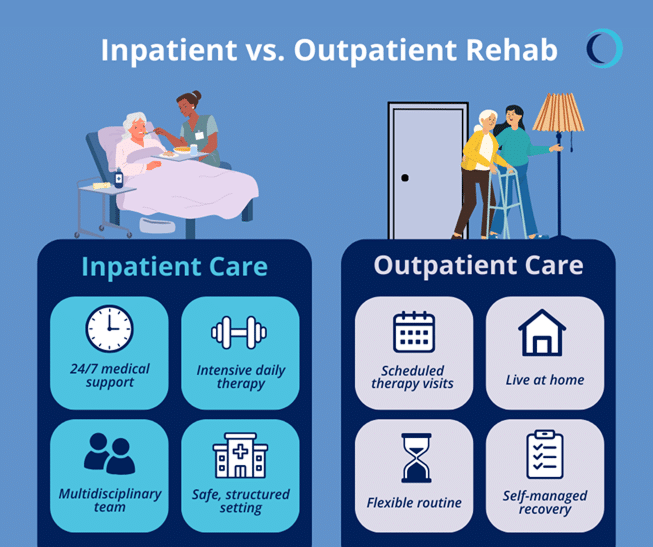
The differences between inpatient vs outpatient care are significant and impact both the patient experience and healthcare costs.
Duration of Stay
-
Inpatient: Typically involves hospital stays ranging from 1 day to several weeks, depending on the condition.
-
Outpatient: Treatment is completed in a few hours or during a single visit, allowing patients to go home the same day.
Type of Medical Procedures
Table: Common Procedures – Inpatient vs Outpatient
| Type of Care | Common Procedures | Typical Duration |
|---|---|---|
| Inpatient | Heart surgery, major orthopedic surgery, stroke care | 2–14 days or more |
| Outpatient | Colonoscopy, cataract surgery, minor dermatology procedures | 1–4 hours |
Level of Monitoring and Supervision
-
Inpatient: Continuous supervision by nurses and doctors; frequent vital sign checks and round-the-clock care.
-
Outpatient: Minimal supervision; patient relies on home care and follow-up visits for recovery.
Recovery and Follow-up Care
-
Inpatient: Recovery occurs within the hospital under medical supervision; follow-ups may be scheduled after discharge.
-
Outpatient: Recovery occurs at home with guidance from healthcare professionals; follow-up visits ensure proper healing.
Costs Comparison: Inpatient vs Outpatient

Financial considerations play a major role in healthcare decisions. Understanding the cost differences can help patients plan ahead.
Hospital Stay and Facility Charges
-
Inpatient: Includes room charges, meals, nursing care, and equipment usage. Longer stays significantly increase costs.
-
Outpatient: Facility fees are lower because there is no overnight stay.
Insurance Coverage Differences
Many insurance plans cover both inpatient and outpatient services, but coverage percentages and copays may vary. Some policies favor outpatient procedures to reduce costs.
Additional Costs
Other costs may include medications, lab tests, imaging, and post-procedure rehabilitation. Inpatient care often includes these automatically, while outpatient patients may pay separately.
Example:
Patients often assume inpatient care is always better, but for minor surgeries, outpatient services can provide safe, cost-effective treatment with faster recovery.
Advantages of Inpatient and Outpatient Care
Benefits of Inpatient Services
-
Round-the-clock monitoring ensures patient safety
-
Immediate access to emergency interventions
-
Ideal for complex surgeries and serious illnesses
Benefits of Outpatient Services
-
Lower costs and reduced hospital exposure
-
Greater convenience and flexibility
-
Quicker return to daily life
When Each Option Is Most Suitable
-
Inpatient: Severe medical conditions, major surgeries, high-risk patients
-
Outpatient: Minor procedures, routine checkups, preventive care
Risks and Considerations
Potential Risks in Inpatient Care
-
Higher exposure to hospital-acquired infections
-
Longer hospital stays may increase complications
-
Higher overall costs
Potential Risks in Outpatient Care
-
Limited supervision after procedure
-
Patients must manage recovery and follow instructions carefully
-
Some complications may require emergency hospitalization
Factors to Consider Before Choosing
-
Severity of condition
-
Doctor’s recommendation
-
Insurance coverage and budget
-
Home support system for recovery
Common Procedures: Inpatient vs Outpatient

Examples of Inpatient Procedures
-
Heart bypass surgery
-
Major orthopedic surgeries
-
Stroke or serious infection management
Examples of Outpatient Procedures
-
Endoscopy or colonoscopy
-
Cataract surgery
-
Minor dermatological surgeries
Trends in Modern Healthcare
-
Many procedures that were once inpatient are now done outpatient due to minimally invasive techniques.
-
Telemedicine and home monitoring reduce the need for hospital stays.
Patient Experience and Recovery
Recovery in Inpatient Settings
Inpatient recovery includes continuous medical care, rehabilitation services, and structured nutrition plans. This ensures safety but may limit personal freedom.
Recovery in Outpatient Settings
Outpatient recovery relies on self-care at home, family support, and scheduled follow-ups. It allows patients to maintain daily routines but requires discipline and adherence to care instructions.
Tips for a Smooth Recovery
-
Follow all doctor instructions carefully
-
Attend follow-up appointments
-
Maintain a healthy diet and hydration
-
Report any unusual symptoms immediately
Example:
Recovery doesn’t just depend on the procedure—it also depends on whether you’re in an inpatient or outpatient setting and how well you follow post-care instructions.
Making the Right Choice
How Doctors Decide Between Inpatient and Outpatient
Medical professionals consider the procedure type, patient health status, risks, and recovery needs. They aim to balance safety, efficiency, and cost-effectiveness.
Questions Patients Should Ask
-
Is this procedure suitable for outpatient care?
-
What are the risks if I recover at home?
-
How will insurance coverage differ?
-
What support do I need post-procedure?
Planning for Costs and Care
-
Compare facility charges
-
Check insurance benefits
-
Arrange home support for outpatient recovery
Conclusion
Understanding inpatient vs outpatient services is crucial for making informed healthcare decisions. While inpatient care provides intensive monitoring for serious conditions, outpatient care offers flexibility, lower costs, and faster return to daily life. By considering medical needs, costs, and recovery requirements, patients can choose the best option for their health.
Key Takeaways:
-
Inpatient care involves hospital stays and continuous monitoring.
-
Outpatient care is suitable for minor procedures and faster recovery.
-
Costs, insurance coverage, and post-care support play major roles in decision-making.
-
Many modern procedures are shifting toward outpatient care for efficiency and safety.
Read More:-Health Care Delivery System: Meaning, Types, Structure Explained