


Introduction
Ocular migraines can be scary, especially when they come on quickly and make it hard to see. It might be scary and confusing to see flashing lights, blind spots, zigzag patterns, or lose vision in one eye for a short time. Even though these episodes don’t last long, it’s important to know what ocular migraine causes so you can avoid them and feel better.
A lot of people mix up ocular migraines with ordinary migraines or migraines with aura. Even though they are similar, ocular migraines are different because they cause problems with vision that usually only affect one eye. In most circumstances, they are not harmful, which is excellent news. But if the incidents keep happening, they could be a symptom of underlying triggers or health problems that need to be looked into.
This in-depth guide will look at the science behind the ocular migraine causes, prevalent risk factors, lifestyle triggers, medical disorders, and useful techniques to lower your risk.
What is an ocular migraine?

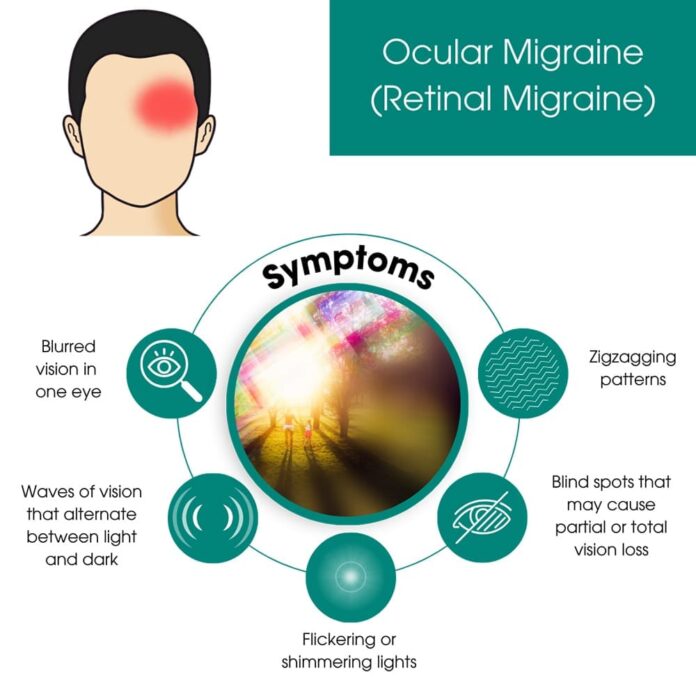
An ocular migraine, often called a retinal migraine, is a disorder that makes one eye’s vision temporarily blurry. These problems could include:
-
Lights that flash
-
Lines that shimmer or go in a zigzag pattern
-
Dark spots
-
Vision loss for a short time
Episodes usually last from 5 to 60 minutes, and a headache may or may not follow.
Ocular Migraine vs. Migraine With Aura
Migraine with aura affects both eyes and starts in the brain. On the other hand, an ocular migraine usually only affects one eye and is caused by abnormalities in blood flow to the retina.
A Quick Look at Ocular Migraines
-
Length: 5 to 60 minutes
-
One eye is usually affected
-
Pain: Can happen with or without a headache
-
Risk Level: Not usually harmful, but it’s best to see a doctor the first time it happens
-
Recurrence: It can recur once in a while or all the time, depending on what sets it off
How Ocular Migraine Causes Function

To understand what ocular migraine causes, you need to look at both neurological and vascular (blood flow) variables.
1. Changes in the blood flow to the retina
A transient drop in blood flow to the retina is one of the main ocular migraine causes. When blood vessels get smaller, less oxygen gets to the eyes, which can cause temporary vision problems.
Stress, hormonal changes, or other things might cause blood arteries to narrow.
2. Neurological Factors
Abnormal electrical activity in the brain is another important ocular migraine causes. Cortical spreading depression is a term for this condition. It can change how nerves send signals and impact eyesight.
Researchers are still trying to figure out why this happens, but they think it has something to do with migraine disorders in general.
Common Ocular Migraine Causes
A number of things that happen every day can set off an episode. Knowing what sets you off is really important for prevention.
Stress and emotional strain
Stress is a common ocular migraine causes. Stress raises cortisol levels and could change how blood vessels work.
Changes in hormones
Hormonal changes that happen during menstruation, pregnancy, or menopause can be a big ocular migraine causes, especially in women.
Not getting enough sleep
Poor sleep throws off the balance of the nervous system, making you more likely to have migraine-related episodes.
Lack of water
Even mild dehydration can impair blood flow and induce a reaction.
Not Eating Meals
Migraine attacks are closely linked to having low blood sugar levels.
Lifestyle Triggers Linked to Ocular Migraine Causes

Our modern lives put us in touch with many things that could set off our triggers.
Too Much Time on Screens
Long periods of time spent looking at digital screens can make your eyes tired and cause vision problems.
Lights that are bright or flickering
Fluorescent lights or bright sunlight can make migraine pathways more active.
Powerful Scents
Perfumes, smoke, or chemical smells may make migraines worse.
Too Much Caffeine or Stopping It
Both too much caffeine and stopping it suddenly can hurt blood vessels.
Table: Common Triggers and What They Do
| Trigger | How It Contributes | Prevention Tip |
|---|---|---|
| Stress | Raises cortisol levels and stress in blood vessels | Meditate |
| Not enough water | Decreases the amount of blood | Drink 8 to 10 glasses of water |
| Changes in hormones | Changes how blood vessels respond | Keep track of cycle patterns |
| Time spent on screens | Makes your eyes tired | Follow the 20-20-20 rule |
| Not eating meals | Lowers blood sugar | Eat balanced meals regularly |
| Bright lights | Make the visual nerves work harder | Put on some sunglasses |
Medical Conditions Linked to Ocular Migraine Causes
In rare circumstances, repeated occurrences may be connected to underlying medical issues.
Blood Pressure That Is Too High
Hypertension that isn’t regulated can change the flow of blood to the retina.
Heart and blood vessel problems
Heart and blood vessel problems can make blood vessels less stable.
Autoimmune Conditions
Some immunological disorders can affect blood flow and swelling.
Injuries to the head
People who have had head trauma in the past may be more likely to get migraines.
Things That Put You at Risk
Some people are more likely to get ocular migraines than others.
Age and Gender
Women are more likely to get migraines, especially when they are of childbearing age.
Family History
Genetics are a big part of what ocular migraine causes. Your risk goes up if someone in your family gets migraines.
Long-Term Stress
Stress that lasts for a long time makes it harder for the body to control blood flow.
When to Go to the Doctor
Most ocular migraines are not dangerous, however you should visit a doctor if you have:
-
Loss of vision that lasts longer than an hour
-
Episodes that happen a lot
-
Very bad headache with neurological signs
-
Feeling weak or numb
These might be signs of other dangerous illnesses, like a stroke or a disorder of the retina.
How Doctors Figure Out What Ocular Migraines Are
Diagnosis usually involves:
-
Review of medical history
-
Checkup of the eyes
-
Neurological checkup
-
Imaging tests, if needed
Before verifying the ocular migraine causes, doctors want to rule out more serious causes of visual loss.
Ways to Treat and Prevent
There is no one-size-fits-all solution, but management focuses on controlling triggers and easing symptoms.
Changes to Your Lifestyle
-
Stick to a regular sleep pattern
-
Drink enough water
-
Eat meals that are balanced
-
Cut down on time spent in front of screens
How to Handle Stress
-
Meditation
-
Exercises for deep breathing
-
Yoga
-
Writing in a journal
Choices of medicine
Doctors may tell you to take:
-
Beta-blockers
-
Blockers of calcium channels
-
Drugs that stop seizures
-
Drugs for migraines
Daily Prevention Checklist (Short)
✔ Drink adequate water
✔ Don’t miss meals
✔ Handle stress well
✔ Get 7–9 hours of sleep
✔ Keep a log of your triggers
✔ Limit your coffee consumption
Are Ocular Migraines Bad for You?

Most of the time, they don’t put your life in danger. But if these incidents happen again and again, you should see a doctor to make sure there aren’t any significant vascular problems.
Retinal migraines that happen often might cause irreversible vision difficulties, so it’s crucial to get help as soon as possible.
Is it possible for ocular migraines to cause a stroke?
The risk is usually modest, but people with migraine disorders may be at a slightly higher risk of having a stroke, especially if they smoke or use certain hormonal birth control methods.
Talk to your doctor about what puts you at risk.
Long-Term View
Most persons who get ocular migraines live regular, healthy lives. When you know what ocular migraine causes, you can avoid them and cut down on how often they happen.
You can see patterns by keeping track of episodes. For instance, you might notice that they happen during stressful weeks or after a bad night’s sleep.
Questions that are often asked
How long do ocular migraines last?
Most of the time, they last between 5 and 60 minutes.
Do kids ever have ocular migraines?
Yes, although they happen more often in adults.
Are they the same thing as eye strain?
No, eye strain can be uncomfortable, but it doesn’t usually generate visual aura patterns.
Conclusion
Having visual problems can be scary, but learning about the ocular migraine causes can make you feel less scared and more informed. Most episodes don’t last long and can be controlled by making changes to your life.
If you see trends that keep happening, do something about it:
-
Find out what sets you off
-
Make your daily habits better
-
Talk to a doctor or nurse
-
Take care of stress on a regular basis
You may greatly cut down on ocular migraine causes and protect your vision for the long term by learning about their origins and risk factors.
Read More:-What Is Vestibular Migraine? Signs, Triggers and Relief