


Introduction
It can be scary to feel like the room is spinning, have trouble keeping your equilibrium, or have abrupt waves of dizziness. A lot of people think these signs are just vertigo or an infection in the inner ear. But in a lot of situations, the true cause is vestibular migraine.
This illness is different from regular migraines since it mostly impairs balance and spatial orientation instead of causing significant head pain. Some people may not even have a headache, which makes it much more perplexing and often leads to a wrong diagnosis.
This complete guide will teach you all you need to know about vestibular migraine, including its indications and triggers, how to get a diagnosis, and how to find relief. This will help you better understand and deal with this condition.
-
A brain condition that makes it hard to keep your equilibrium
-
Makes you feel dizzy, vertigo, and sensitive to motion
-
It can happen with or without a headache
-
Episodes might last anywhere from a few minutes to a few days
-
Can be handled with changes to your lifestyle and medicine
What is a Vestibular Migraine?

Vestibular migraine is a kind of migraine that mostly affects the vestibular system, which is the region of the brain and inner ear that controls balance and spatial awareness.
The vestibular system helps you stay upright, move around, and know where you are in space. When changes connected to migraines mess up this system, it might make you feel dizzy, like you’re spinning, and have trouble with your equilibrium.
Vestibular migraine is different from regular migraines since the major symptom is generally vertigo instead of throbbing head pain.
What Makes It Different from a Regular Migraine
Typical symptoms of migraines include:
-
Severe headache that throbs
-
Sensitivity to light and sound
-
Feeling sick
On the other hand, vestibular migraine is more about:
-
Dizziness
-
Not steady
-
Sensitivity to motion
-
Problems with balance
You could or might not have a headache.
Signs and Symptoms That Are Common
People can have very different symptoms. Some episodes are moderate and short, while others are strong and continue a long time.
1. Dizziness
One of the most prevalent signs is feeling like you’re spinning even when you’re not moving. The room may feel like it’s shifting or tilting.
2. Feeling dizzy
You can feel lightheaded or like you’re floating.
3. Problems with balance
People may feel shaky when they walk or stand, which makes them more likely to fall.
4. Feeling sick and throwing up
Dizziness often comes with nausea that is caused by motion.
5. Being sensitive to light and sound
Bright lights and loud noises can make symptoms worse, just like they do with other forms of migraines.
How Long Do Episodes Last?
The length of vestibular migraine attacks can change a lot.
-
Short episodes: A few minutes long
-
Moderate episodes: A few hours
-
Long-lasting attacks: Up to a few days
Some people have chronic versions, where symptoms come and go for months at a time.
What Makes Vestibular Migraine Happen?
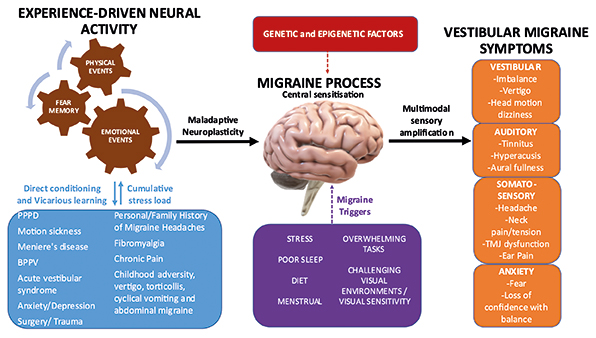
Experts think that the cause has to do with aberrant signaling in the brain, but they don’t know for sure what it is.
Changes in the nervous system
Chemical imbalances that happen with migraines may mess up communication between the brain and the vestibular system.
Genetic Factors
If migraines run in your family, you may be more likely to get them.
Hormonal Effects
Changes in hormones that happen during menstruation, pregnancy, or menopause might cause attacks.
Problems with processing sensory information
The brain may become too sensitive to sensory input, which can make you feel dizzy and off balance.
Things That Happen Often (Common Triggers)
Finding out what triggers vestibular migraines is an important part of managing them well.
Stress
One of the most common causes is emotional strain.
Not getting enough sleep
Sleep patterns that are not regular can make neurological function unstable.
Triggers in Food
Some meals may trigger attacks, such as:
-
Caffeine
-
Booze
-
Cheeses that have been aged
-
Food that has been processed
Changes in the Weather
Changes in barometric pressure can make some people feel sick.
Time spent on screens
Long periods of time spent in front of digital screens may make dizziness worse.
Table: Common Causes and Ways to Avoid Them
| Trigger | How It Affects You | Tip for Being Safe |
|---|---|---|
| Stress | Throws off the balance of the nervous system | Meditate regularly |
| Not getting enough sleep | Makes the brain less stable | Keep a regular sleep routine |
| Caffeine | Changes how blood vessels work | Limit what you eat every day |
| Changes in the weather | Changes how sensitive to pressure it is | Write down patterns in a notebook |
| Screen exposure | Overstimulates the sensory system | Take breaks often |
Things That Could Go Wrong (Risk Factors)
Some people are more likely to get vestibular migraine.
Gender
Women are more likely to be affected than men.
Family History
There is a substantial genetic connection to migraine disorders.
History of Motion Sickness
Individuals who suffer from motion sickness are at an increased risk of developing this illness.
Anxiety Disorders
Anxiety may make dizziness and balance problems worse.
How Do You Know What It Is? (Diagnosis)
There is no one test that can confirm vestibular migraine. Diagnosis usually includes:
-
Comprehensive medical history
-
Evaluating symptoms
-
Checkup of the nervous system
-
Testing of the vestibular system
-
Excluding other balancing issues
Before making a diagnosis, doctors generally rule out things like inner ear infections, Ménière’s disease, or stroke.
Choices for Treatment
There is no permanent treatment, however symptoms can be controlled well.
Changes in lifestyle
-
Get enough sleep every night
-
Drink a lot of water
-
Stay away from things that you know will set you off
-
Eat meals that are balanced
How to Handle Stress
-
Breathing techniques that are deep
-
Yoga
-
Writing in a journal
-
Meditation for mindfulness
Drugs
Doctors may tell you to take:
-
Beta-blockers
-
Blockers of calcium channels
-
Antidepressants
-
Medications that stop seizures
-
Drugs that help with acute migraines
Therapy for vestibular rehabilitation
Specialized physical treatment can help the brain learn new things and improve balance.
Daily Relief Checklist
✔ Don’t miss meals
✔ Drink enough water
✔ Get 7–9 hours of sleep
✔ Cut back on caffeine
✔ Keep track of your symptoms and triggers
✔ Take breaks from screens
When to Go to the Doctor
If you have any of the following, see a doctor:
-
Dizziness that comes on suddenly and is really bad
-
Problems with speech or vision
-
Feeling weak or numb
-
Constant loss of balance
-
Changes in hearing
These signs could mean something worse is going on.
Living with Vestibular Migraine
You need to be patient and mindful when you get vestibular migraine. Writing down your symptoms in a diary will help you see patterns and stop future attacks.
Once people know what sets them off, they often have fewer and less severe episodes.
One of the best long-term techniques is to develop a solid daily routine. Being consistent with your sleep, food, hydration, and stress management can make a big difference.
Long-Term View
Most people who have vestibular migraine lead normal, active lives. Episodes can be annoying, but with the right care, they are usually not too bad.
Some people have fewer attacks over time, especially when they can handle their triggers successfully.
Early diagnosis and proactive care make life much better.
Questions That Are Often Asked
Is vestibular migraine a risk?
It normally doesn’t kill you, but the symptoms can make it hard to do everyday things and make you more likely to fall.
Can it go away by itself?
Some people have fewer symptoms over time, especially if they make changes to their lifestyle that are good for them.
Is it the same as feeling dizzy?
No. Vertigo is a sign of something else, but vestibular migraine is a neurological disorder that can induce vertigo.
Conclusion
It can be worrisome and upsetting to have inexplicable dizziness and balance problems. Learning about vestibular migraine gives you the power to take care of your health instead of being scared by symptoms that come and go.
This illness doesn’t usually cause head pain, but it does have a big effect on balance and daily living. Most people may successfully manage vestibular migraine and lower its frequency with the correct mix of awareness, medical help, and modifications to their way of living.
If your symptoms don’t go away or get worse, see a doctor for a proper examination and treatment advice.
Read More:-Aplastic Anemia Symptoms: Early Warning Signs Guide